
Archives: Videos

It’s Not Going to Get Better on Its Own – Ask for Help

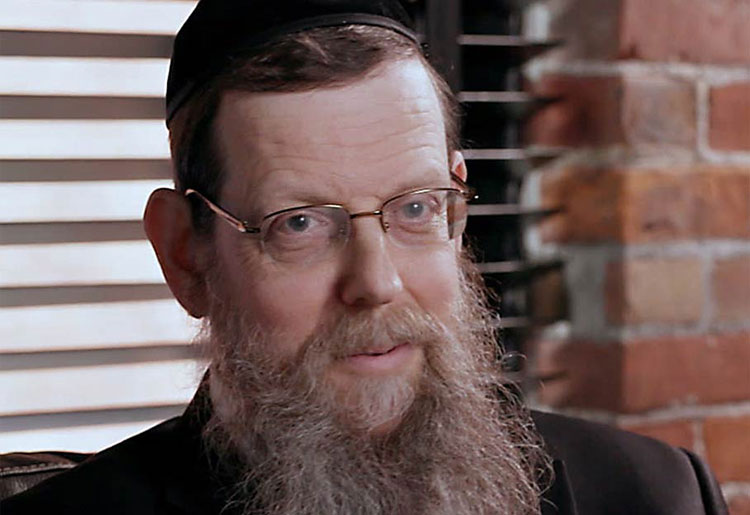
It’s not easy being a teen. It never has been and probably never will be — anxiety and depression are not new phenomena for young people trying to make sense of themselves and the world around them. But as far as Eric Adelman is concerned, this era may be without precedent for the mental health crises that young people are experiencing.

Eric would know. Before becoming Executive Director of Kadima — a local organization that provides comprehensive residential, therapeutic and social services to all people with mental health needs as they move forward in their lives — he worked closely with teen leaders, youth groups and their advisors through BBYO. He knows the pressures teens experience, the high expectations they have for themselves, the competing commitments. And he knows how volatile that all can be when combined with untreated mental illness.

“Unlike a physical illness or mental disability, mental illness can be difficult to understand,” says Eric. “It is harder to see, often difficult to diagnose and certainly easier to mask than a physical illness, such as diabetes or cancer. And, in children, it’s not like a physical illness or a developmental disability that you can recognize early on and that everybody understands what care is going to be needed and what abilities a child will have.”

Identifying and addressing mental health issues would be complex enough without the stigma that discourages people from seeking help or intervening to offer support to others.

Contrary to the changes swirling around them, Eric notes that young people may not realize that the way they are feeling can change — can be changed. Once they push past the fear and stigma of feeling like they are to blame for their own mental state, there are many resources, “through therapy, through medications, through other supports so they can live a meaningful and happy life,” says Eric. “If you’re sick, you go to the doctor, if you’ve got a toothache you go to the dentist … it’s not going to get better on its own.” Medical conditions that were a source of shame can become as socially normal to treat as they are common throughout the population.

Hope, unto itself, isn’t a treatment, notes Eric. But it is something young people need and they community can help provide: “The most important thing we can do to make sure young people have hope is to make sure they know recovery is possible.”

Enter A Trusted Adult. Whether a parent, teacher, clergy, coach or advisor — whether it is for the teen herself or a friend showing signs of sickness — seeking out trusted adults, early and often, can take a crisis out of the pressure cooker of adolescence and into care of mental health professionals the proverbial village it takes to raise a child into an adulthood where she can lead her best life.

As unequivocal as the cloud overhead may be, Eric is just as certain about the silver lining: “Young people need to know that they’re not alone … they’re not alone.”
The Importance of Support for Transgender Youth

At 6 years old, Olivia knew. She didn’t have the words to describe it — or the courage it would take to utter those words aloud — but she was certain all the same: “I’m a boy.” The feeling of alienation between mind and body persisted — “I don’t know what’s wrong, but something definitely is” — though it would be another five years before a clue emerged in the most contemporary of places.

Youtube. Specifically, a video about female-to-male transition that gave this fifth grader a new insight into these sensations and a new word to replace anxiety with identity.

“I’m transgender” was not a statement that Hunter (then still Olivia socially and biologically) could say to his mom until he had done extensive internet research to understand what he was going through and how the transition process may work.

Even then, it took a spark — what may have seemed like the typical flint-to-steel contact of a strong-willed 8th grader and parent over the length of a haircut and clothing options — to light the torch for Hunter’s journey.

Indeed, Roz and Richard, Hunter’s parents, had their own learning curve, along with a decade and a half of raising a pair of daughters in a world of gender norms.

“I don’t know that I knew he was struggling with something in particular. There were a lot of things kind of converging, but we certainly wouldn’t have put it all together and said, ‘Oh, there must be gender issues.’”

But they had many of the same data points to connect the dots with how Hunter had been feeling for years.

“Things started making sense. All of his game avatars were male figures. And the toys he preferred to play with were traditionally ‘boy toys.’ My husband initially was grasping, trying to find maybe some other reasons for why Hunter was feeling the way he was feeling.”

To understand what his lifelong “tomboy” was going through, Richard set out to educate himself on everything from terminology to therapy, including an “intense” two-day conference sponsored by Ferndale’s Affirmations.

As intrinsically personal and layered as Hunter’s transition was, the loving community around him scaffolded and supported the true architecture of his identity.

As Hunter worked to build his true self — name, voice, body — from blueprints that had always been present — that scaffolding mitigated the exceptional risks that transgender individuals face. More than 40% have attempted suicide — nine times higher than the national average.

“Even with the support, coming out and transitioning was still hard,” Hunter vividly recalls, but with “a strong support system at home, anyone could say anything to me and it would just bounce off my back … it was their problem, not mine.”

Roz fought for Hunter at every step of the process — documenting their journey and engaging other families through callhimhunter.wordpress.com. From the outset she sensed intuitively what another parent going through the process finally articulated: “I would rather have a live son than a dead daughter.” In a true testament to the love they have for their son and the support they feel the entire transexual community needs, Roz and Richard run Stand with Trans, an advocacy and support group that they founded. The group is growing nationwide and providing vital supports so that no transgender person will ever feel that suicide is the only option.

Mental Illness and Substance Abuse

One life lost to addiction is one life too many. That is both the tag line for the Jamie Daniels Foundation and a truism the Daniels family never thought would apply to one of their own. 

But the signs were there well before Jamie’s death in 2016. As his mom describes it, what started with a misdiagnosis of ADHD had the telltale signs of drug abuse — but was all too tempting to explain away.  

A perfectionist struggling with mental illness and relying on opioids in a vicious cycle, Jamie would lie directly to his parents about being high. It was easier for them to overlook the changes in their son than to confront the reality of the situation. 

The distance between today’s struggles with addiction and the start of lifelong sobriety can be as incremental as signaling to those around you and changing lanes. But it can feel like slamming on the brakes and pivoting in an instant. As a result, people too often either keep barreling down the same destructive path or turn so hard they spin out. 

That experience was all to literal for Jamie. When his sister’s phone rang, she didn’t know the number but she knew — knew from her brother’s erratic behavior and abrupt departure days earlier — that she needed to answer it. Jamie had flipped his car driving home from her apartment and was ready to seek help to support his sobriety. 

In Florida, Jamie’s 180 degree turn toward safety and sobriety spun into a 360 that ended with his death from an overdose. Out of his family’s reach and into the grasp of what they later understood to be a “broken, billion-dollar recovery industry,” Jamie fought his way to seven months sober. 

At the same time, the Daniels family was unknowingly falling victim to patient brokering, where their comprehensive insurance coverage and distance left unscrupulous facilities to fraudulently charge for questionable treatments and phantom testing with impunity.  

Then, under circumstances and for reasons that remain a tragic mystery, Jamie took “a synthetic opioid that included a mix of heroin and fentanyl, a substance 100 times more potent than morphine.” Whoever it was that supplied Jamie with the drugs left him there to die. 

One life lost to addiction is one life too many. The Jamie Daniels Foundation seeks to end the stigma that is fueling the addiction crisis by providing education, resources, guidance, and support to people battling drug addiction so that lives can be saved and healing can be created within families. 

For Jamie’s dad, it’s clear in hindsight that the “shame and stigma” associated with addiction make the hurdles to overcoming it that much higher. For his mom, the real shame is that people disassociate substance problems from mental illness even though fully half of people suffering from substance use disorder also struggle with mental illness. 

Jamie’s family would rather you talk — about him and them, about what they did or didn’t do — than give over our power to fight the epidemic to a conspiracy of silence.